
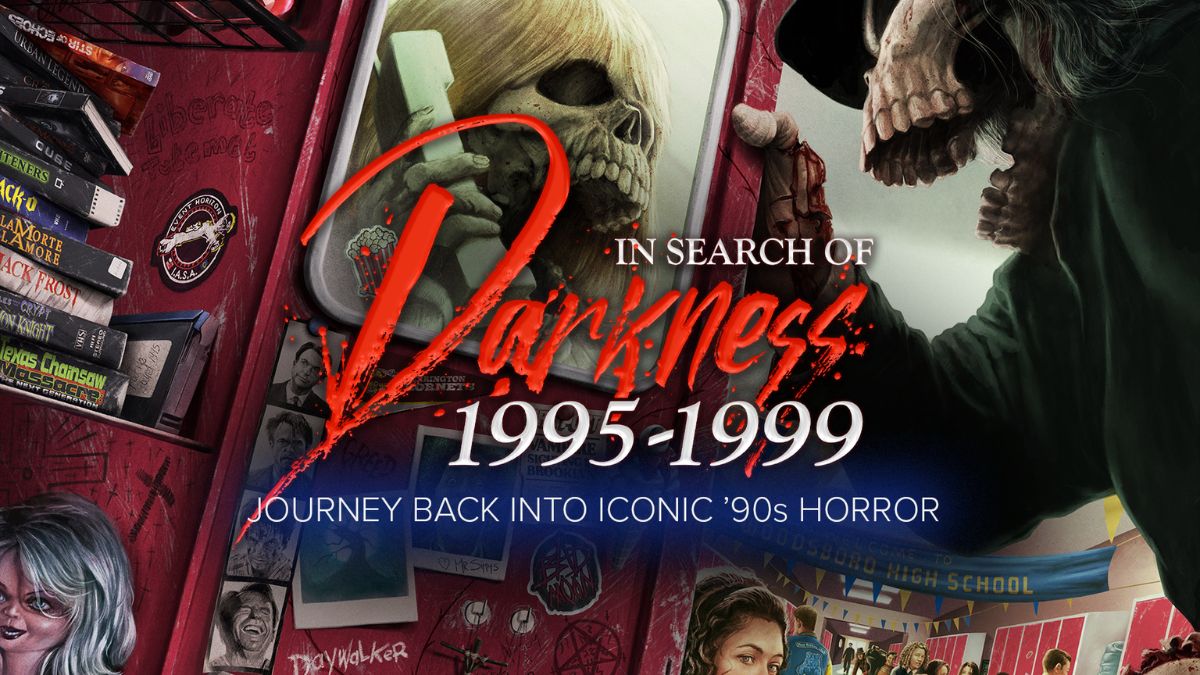
Sometimes, comparisons just aren’t fair. The 1980s were such a fertile decade for horror cinema that it’s almost unbelievable the same creative boom could ever happen again. Unsurprisingly, its shadow almost immediately loomed over the 1990s. In the popular imagination, they came to be seen as barren ground for the genre, marked by remakes, rehashes, and sequels to sequels. Still, there’s no denying that the ’90s delivered some truly brilliant moments in horror cinema history. This is precisely what In Search of Darkness: 1995-1999, from CreatorVC Studios, confirms. The new documentary—part of a series that first revisited the early 1990s, after three chapters dedicated to 1980s horror films—is essential viewing!
At the nearest video store…
Anyone who grew up in Brazil during the 1990s will remember the horror films that dominated the broadcast TV schedules. There was even a special slot dedicated to the genre on Band network channel. It was Cine Trash, hosted by the nation’s horror cinema legend Coffin Joe, which, in 1996 and 1997 afternoons, showcased a mix of blood, guts, monsters, and everything that is best (or worst) in low-budget gore films. It comes as no surprise that its content was deemed offensive, and that Cine Trash, in its last breath, eventually ended up being pushed to late-night programming.

Through television, children and teenagers could discover the horrors of past decades, as well as the new releases coming from abroad. They could also rent their favorite cult classics at the nearest video store. Today, video stores are relics of a bygone era. In Search of Darkness: 1995-1999 taps into nostalgia by reclaiming what was most distinctive about horror films of that period—and about our emotional connection to them.
The Times They Were A-Changin’
The documentary opens by outlining its context, showing how the 1990s marked a turning point. With the end of the Cold War, social fears shifted toward more mundane situations and, on a broader scale, toward the atmosphere of a world undergoing rapid change. We should not forget that analog media began competing with digital technologies (CD-ROMs, PDAs, DVDs), a process accelerated by the advent of the internet and mobile phones. Everyday life was tinged with anxiety and a dark sense of anticipation, typical of end-of-cycle periods. What would come with the new millennium? Was the end of the world near? Was contact with extraterrestrial beings imminent? The truth was out there…
A new addition to the series
In Search of Darkness: 1995-1999 follows the same format and structure as the previous entries. After setting the context, the documentary presents landmark films from the second half of the 1990s in chronologically arranged segments. Industry professionals—the filmmakers themselves, along with producers, actors, and others—look back to the period and share behind-the-scenes insights into this creative landscape through dynamic interviews.

Viewers may miss one film or another—especially those outside the Europe–United States axis—but the sheer number of titles only reinforces how fertile the ground was for horror to flourish. From this context emerged everything from mainstream productions with more substantial budgets to the shabbiest B-movies, as well as direct-to-video or televison releases. After all, independent cinema had never been so alive. All things considered, 1990s horror films drank deeply from pop culture, driven by a hunger for something new in the face of universal fears.
Darkness at the turn of the millennium
The journey toward the end of the millennium begins in 1995, as the title suggests. From there, the new In Search of Darkness moves year by year until reaching 1999. Not without making strategic stops along the way to explore more specific topics—such as the segment dedicated to the music of 1990s horror films.
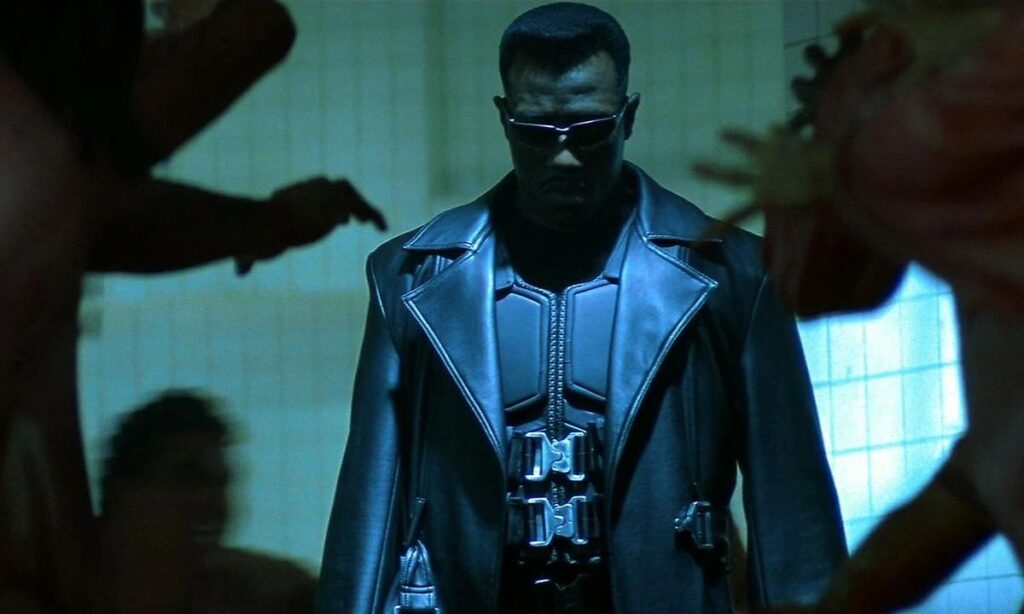
What the film selection from In Search of Darkness reveals is a growing pursuit of diversity, seen in the prominence of female leads and the casting of Black actors—e.g., the stylish Blade (1998), starring Wesley Snipes, which kicked off the superhero film genre. Some of these productions emerged as a response to urgent social issues: racial conflicts, domestic violence, police abuse, and more. Others served as metaphors for conformity, fueled by rock, pop rock, and grunge soundtracks—the very essence of the 1990s.
New trends
In Search of Darkness: 1995-1999 highlights the trends cimented in the 1990s, such as serial killer or alien invasion movies, and screen adaptations of H. P. Lovecraft. In others, like Bats (1999), nature ran completely wild, leaving humans powerless to resist—in every sense. But the standout phenomenon had a name: Stephen King, with several of his books adapted for both film and television.
Films like Bride of Chucky (1998) signaled a shift in the horror landscape. Horror icons of the past were given new life, repackaged in remakes or fresh iterations—this was the case with Psycho (1960) and The Texas Chainsaw Massacre (1974), among others. At the same time, the slasher genre experienced a revival with Scream (1996), spawning immediate blockbusters filled with teen stereotypes and a greater focus on male bodies. From that point on, audiences would embrace a healthy dose of parodies and self-referential films. By the end of the decade, the term found footage also took on new meaning with The Blair Witch Project (1999), which inspired countless others.
And we can’t forget the Japanese wave that swept cinemas around the world. The so-called J-Horror had its own distinctive elements, evoking fear with strong visual appeal: “human” threats, female ghosts, the relationship between technology and the supernatural, and a darker vision of the universe. Ringu (1998) stands as an emblematic example. This and other films quickly inspired Western remakes—almost as fast as instant noodles.
The verdict
In Search of Darkness: 1995–1999 not only complements but completes the previous title, which focused on the period 1990–1994. It pays attention both to the production and the reception of horror films from the second half of the 1990s, offering a panorama of the era along with creative insights from within the industry. It’s also irresistibly nostalgic for horror fans, especially those who grew up in the ’90s.
In Brazil, we experienced that decade to the fullest—both on the big screen and on television. Some of the films mentioned in the documentary, like Jurassic Park (1993) and Event Horizon (1997), were shown in Brazilian movie theaters. Others, such as Xtro 3 (1995), aired on the beloved Cine Trash, along with titles broadcast on other TV channels, like Wishmaster (1997). This new search for darkness grasps a conclusion, which we know well: that the 1990s were a truly special decade for horror.
Watch In Search Of Darkness 1995 – 1999 Trailer:
[cite]

